Thursday, March 3, 2022

San Diego VA Physician Promotes Unsupported Fear of Brain-to-Bladder Vaping Dangers & Diseases


During my 26-year career as an oral and maxillofacial pathologist at the University of Alabama at Birmingham, I had the opportunity to participate in diagnosis and treatment of patients at the Birmingham Veterans Administration Medical Center (VAMC).  There I observed a high rate of smoking among veterans (confirmed here) and an elevated rate of admissions for related serious illnesses.  Many patients would drag their IV lines, catheters, nasogastric feeding tubes and other medical equipment outside in order to satisfy their craving for cigarettes.

When I enrolled smokers in the first-ever open label pilot study of reduced risk products (Skoal Bandits, study published here), I expected veterans to be likely adopters of smokeless tobacco products, but I was unable to convince the VA to offer their patients that option.

VA clinicians aren’t obligated to tell cigarette-consuming patients about safer smoke-free substitute products, despite the fact that their Hippocratic Oath requires them to do no harm.  But a recent article by the VA Office of Research and Development demonstrates deadly deception. 

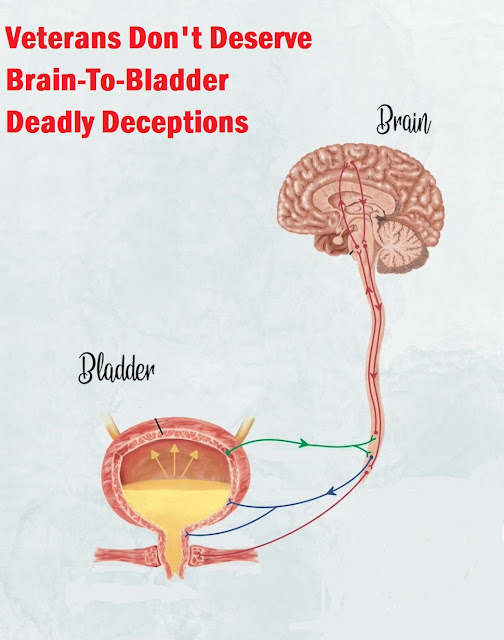
The VA article centers around Dr. Laura E. Crotty Alexander, a physician at the San Diego VAMC and University of California San Diego who co-authored a journal article, Vaping and Lung Inflammation and Injury.”  Dr. Crotty Alexander said that she “has heard from more and more patients over recent years that they’re thinking of switching to vaping e-cigarettes as a safe alternative to traditional cigarettes.”  Her response has been to tell them that switching is a “dangerous situation,” that e-cigarettes come with wide-ranging dangers of their own, and that they have far more dangers than even she expected.  “[E]-cigarettes cause their own set of diseases that seem to impact just about every organ in the body—from the brain to the bladder.”

What evidence of dangers and diseases did she provide?  None.

In fact, the VA authors admit in their journal article that the dangers and diseases have only been observed by researchers torturing cell cultures and mice.  Crotty Alexander’s co-author Dr. David Christiani acknowledged, “The disease process can be very long and difficult to unravel” -- in other words, the authors can’t point to actual human impact.  They do, however, have “lingering questions” about “whether there is a risk of lung cancer from chronic e-cigarette use, and what risks exist beyond the lungs—to heart vessels and a woman’s reproductive system, for example.” 

The authors assert, “Additional research is ongoing to clarify the dangers from vaping, and how vaping damages the lungs and other organs.  Long-term human studies, in particular, could bring the risks from e-cigarettes into better focus…further research could help untangle how vapers’ bodies develop disease” and “promise to identify early indicators of—and ultimately treatments for—vaping-related disease.” 

In the absence of actual evidence of danger or disease, and with proof of the harm reduction attributes of smoke-free tobacco products, clinicians ought to adhere to the Hippocratic Oath and advise their patients who smoke of confirmed truths, rather than attempt to scare them with unsubstantiated brain-to-bladder speculation.


Wednesday, February 23, 2022

Different Strokes for Different Smokes: More Evidence That All Quitting Options Are Vital


Investigators at the University of Nebraska Medical Center in Omaha and the University of California San Francisco have published an important study in JAMA Network Open on “Exposure to toxicants associated with use and transitions between cigarettes, e-cigarettes, and no tobacco.”

Hongying Dai and colleagues looked at 55 tobacco exposure biomarkers (mostly toxins) in the urine of adult smokers, vapers and dual users in the first wave of the Population Assessment of Tobacco and Health Study.  They compared this data with urine samples from the same participants one year later in Wave 2, when the participants may or may not have changed their tobacco use status.

While Dai and coauthors “found complex patterns and heterogeneous health outcomes associated with transitions between cigarettes and e-cigarettes,” the results can be succinctly summarized.  First, “transitions from dual use or exclusive cigarette use to exclusive e-cigarette use and transitions from any tobacco use to no use” were associated with sharp declines in toxins. Second, “transitions from exclusive e-cigarette use to cigarette use or dual use” were associated with “moderate to large effect” increases in toxin levels.  And third, “transition from exclusive cigarette smoking to dual use of cigarettes and e-cigarettes” didn’t provide any meaningful change in urinary toxins.

The authors found that “only a small percentage of [Wave 1] exclusive cigarette smokers and dual users transitioned to exclusive e-cigarette use at [Wave 2] (1.2%and 5.6%, respectively), which could limit ben

efits in moving combustible cigarette smokers to less hazardous, noncombustible e-cigarettes.”  This is an important statement, because it acknowledges less e-cigarette harm by referencing an FDA press release from 2017 (here).  More importantly, it is followed by a solid explanation for the low transition rate to vapor: “low effectiveness in early generations of e-cigarettes in delivering nicotine [the PATH Waves were in 2013 and 2014, when e-cigarettes were not very effective], lack of knowledge among cigarette users to distinguish harmful effects between dual use and exclusive e-cigarette use, or the effects of negative public health messaging [emphasis added, references omitted].”

All of the above is informative, but the real news from this study is demonstrated in the following table.  It reports levels of cotinine – a breakdown product of nicotine – in the urine of participants, according to the product they used at Wave 1, and one year later at Wave 2.  Cotinine levels are widely used to indicate tobacco use levels.  In general, higher cotinine indicates more tobacco use.  Higher cotinine, especially with cigarette combustion, also means greater exposure to toxins. 


Urinary Cotinine Levels* at PATH Waves 1 and 2, According to Product Use
Wave 1 Product (n users)Wave 1 CotinineWave 2 Product/Cotinine


NoneCigarettes OnlyE-Cigarettes OnlyDual Use


Cigarettes (247)1585


Cigarettes (1820)2273
2265

Cigarettes (32)1833

713
Cigarettes (257)3068


2522


E-cigarettes (44)162


E-cigarettes (14)502
1942

E-cigarettes (121)727

470
E-cigarettes (31)972


2569


Dual use (42)2136


Dual use (315)2690
2628

Dual use (36)2792

1192
Dual use (252)3179


3374
*in nanograms per milliliter of urine


One can readily see that cotinine levels were high in smokers and/or dual users in both waves.  Cotinine levels among e-cigarette users were much lower, confirming that in 2013-14, the products did not deliver nicotine very effectively.

Everyone in the first four rows of the table smoked cigarettes in Wave 1, so one might expect that their cotinine levels in that wave would be the same.  Instead, there were huge differences between them, depending on where the smokers ended up at Wave 2.  The 247 smokers who had a cotinine level of only 158 ng/ml at Wave 1 quit everything at Wave 2 and had negligible cotinine.  The highest Wave 1 cotinine levels were in smokers who continued to smoke at Wave 2, while the smokers who ended up with e-cigarettes went from 1833 ng/ml at Wave 1 to 713 at Wave 2. 

The same is true for the other two categories: The e-cigarette users and dual users at Wave 1 who quit completely at Wave 2 started out with much lower cotinine levels. 

The take-home message is hugely important.  Tobacco users at Wave 1 may have self-selected their Wave 2 product use based on their cotinine status at Wave 1.  This says that those who quit completely, switched to e-cigarettes, or stayed with cigarettes were entirely different groups of smokers, each with distinct nicotine needs.  Because no one can predict how individual smokers will be able to quit, they should be provided access to all quit-smoking options.


Wednesday, February 16, 2022

CDC Exploited the 2021 Teen Vaping Survey, But Still Withholds Raw Data from Independent Researchers


For years, I have objected that federal agencies selectively release information from their national surveys months or years before making the data available to all external researchers (here, here, here, here and here).  This practice guarantees that government officials control the narrative about behaviors that they deplore.  The Centers for Disease Control and the Food and Drug Administration have perfected this practice, perpetuating the myth of a teen vaping “epidemic” by releasing selected narrative-reinforcing data points from the annual National Youth Tobacco Survey long before providing outsiders with the raw data. 

Interestingly, while the CDC quietly acknowledged that the so-called epidemic had subsided in 2020, and that teen vaping rates plummeted in 2021 (here), the agency’s PR machine continued to generate sensational storylines:

“E-Cigarette Use in Teens Prevalent During COVID-19 Pandemic” (here)

“E-cigarette use among youth remains a serious public health issue during the COVID-19 pandemic” (here)

“CDC, FDA data find 2 million current teen e-cigarette users” (here)

Jacob Sullum, a senior editor at Reason magazine, said this about the government response to 2021 NYTS data: “The Centers for Disease Control and Prevention (CDC), which conducts the survey, and the Food and Drug Administration (FDA), which regulates ‘electronic nicotine delivery systems,’ both welcomed this evidence that the ‘epidemic’ of underage vaping is abating. Just kidding.”  In fact, Sullum accused the agencies of ignoring the decline in underage vaping precisely because it weakens the case for government action.

The CDC’s timing of data dumps is telling. Tobacco research and policy experts were not only impressed by the teen vaping decrease in 2020, but also by the speed in which the CDC released that year’s NYTS data.  The agency published its report on teen vaping on December 18 (here), and released underlying data on December 21 (here). 

The 2021 NYTS is being handled differently. The CDC published its corresponding report on October 1, but over four months later, the data is still under wraps.  It’s hard to say if the delay is related to the sharp decrease in teen vaping last year, but it is clear that the delay allows the crisis narrative to persist. That is unacceptable.